
uterine fibroids
what are
uterine fibroids?
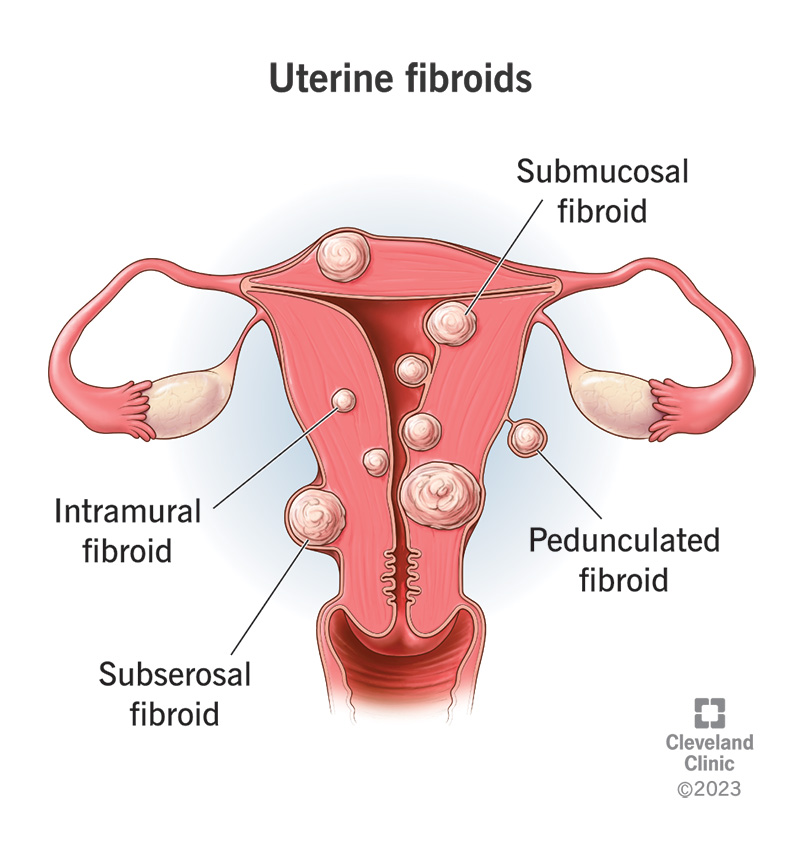
Uterine fibroids are benign, non-cancerous growths ino the walls of the uterus, or womb. They can range from less than an inch to more than six inches in diameter. Most fibroids don’t cause symptoms and are only discovered during a routine pelvic examination.
what
symptoms can uterine fibroids cause?
Prostate artery embolization (PAE) has emerged as an alternative to more invasive surgical procedures.
PAE is an interventional radiology procedure that injects small particles directly into the arteries (blood vessels) that supply blood to the prostate, which leads to devascularization (decrease in blood supply) of the obstructing portion of the prostate.
When the prostate reduces in size, (because the blood supply is slowed), there is lessening of obstruction along the urinary pathway and less pressure on the bladder.
what are
the treatment options for uterine fibroids?
Medicine: NSAIDS, birth control, IUDs, hormone injections, iron supplements
High-intensity ultrasound: Ultrasound waves penetrate the abdominal wall and heat fibroid tissue, causing the fibroid to shrink
Endometrial ablation: Removal of the lining of the uterus to reduce bleeding
Radiofrequency ablation: Energy is delivered through a probe to damage the fibroid
Myomectomy: Surgical removal of fibroid tumors
Hysterectomy: Surgical removal of the uterus
Embolization: minimally invasive alternative to surgery that blocks blood flow to the fibroids, causing them to shrink
how is
Uterine fibroid embolization done?
An Interventional Radiologist performs this minimally invasive procedure. The procedure takes place in an outpatient setting in our Interventional Radiology suite. This is in an office setting and does not require hospitalization. Embolization is performed with local anesthesia and sedation (“twilight sleep”).
The procedure is performed through a tiny cut in the groin or wrist. A thin tube called a catheter is inserted under x-ray. The Interventional Radiologist uses a moving x-ray called a fluoroscope to guide the procedure. The catheter is guided to the right and left uterine artery.
Once in the uterine artery, x-ray dye called “contrast” is injected to map out the blood vessels feeding the fibroid.
Tiny particles are then injected through the catheter into the uterine arteries that feed the fibroids. This blocks or “embolizes” the blood supply to the fibroid. With the blood supply blocked, the fibroids begin to shrink. The uterus and ovaries are spared.
Recovery
Uterine fibroid embolization usually lasts about 30 to 45 minutes. Recovery is typically two hours. Patients can return home the same day. Patients can be moderately active immediately after the procedure and return to full activity after seven days.
Advantages of the uterine fibroid embolization
- No incision or scar
- Quicker recovery time (1 to 2 weeks compared to 6 weeks for surgery)
- Treat multiple fibroids at once
- Less risk than surgery
- The uterus is spared